Begin of page section:
Page sections:

  • Go to contents (Accesskey 1)
  • Go to position marker (Accesskey 2)
  • Go to main navigation (Accesskey 3)
  • Go to sub navigation (Accesskey 4)
  • Go to additional information (Accesskey 5)
  • Go to page settings (user/language) (Accesskey 8)
  • Go to search (Accesskey 9)

End of this page section. Go to overview of page sections

Begin of page section:
Page settings:

English en
Deutsch de
Search

End of this page section. Go to overview of page sections

Begin of page section:
Search:

Search for details about Uni Graz
Close

End of this page section. Go to overview of page sections


Search

Joint Programmes

Begin of page section:
You are here:

Joint Programmes News Karbon Biru Project shortlisted for WWF INNO Student Challenge 2022
  • Programmes
  • Contact form
  • News

End of this page section. Go to overview of page sections

Thursday, 31 March 2022

Karbon Biru Project shortlisted for WWF INNO Student Challenge 2022

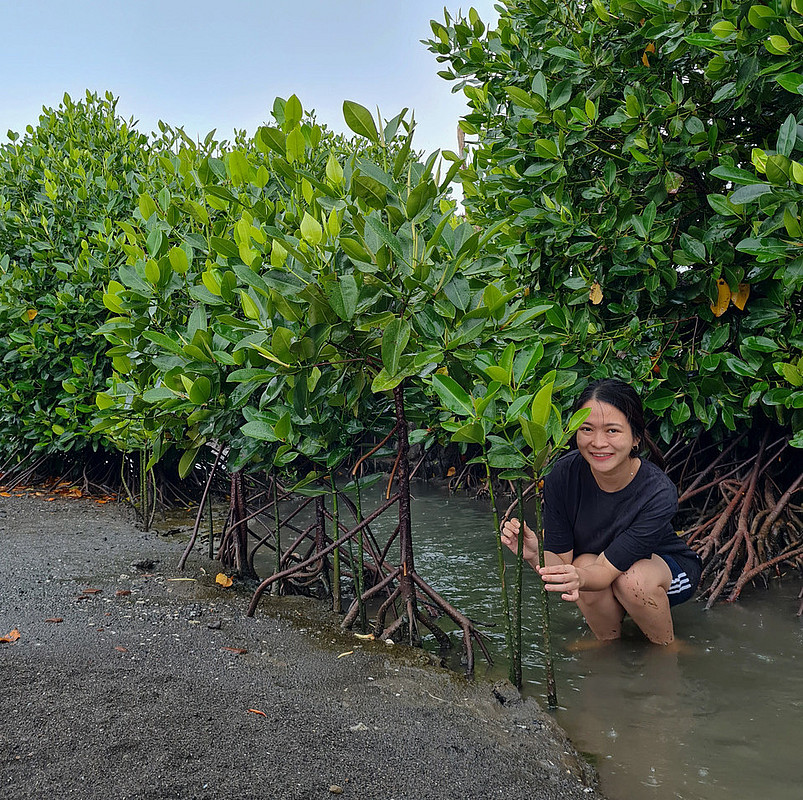
(c) Yulia Ratnasari

CIRCLE students are among the 8 finalists for innovative solutions to conservation problems selected by an internal WWF jury.

The second edition of the WWF-NL INNO Student Challenge encourages students to present innovative solutions for nature conversation problems. The finalists will pitch their projects next month at the WWF. The three best projects will receive 10,000€ each and professional coaching sessions. 

The founders, Yulia Ratnasari, with Pedro Patrique Ferreira da Silva, Irlanda Mora Espinosa, and Nasira Ahsan, who are studying circular economy in the frame of the Erasmus Mundus Joint International Master's Programme in Circular Economy (CIRCLE), are concerned about the disturbed nutrient and biogeochemical cycle. They want to find innovate ways to close the loop and induce regenerative economy via functional diversity.
Karbon Biru is a mangrove and wetlands carbon sequestration project that goes beyond the conventional ‘pay to plant a tree’ model. These are the main facts:

  1. blue forests sequester more than ten times carbon compared to green forests: as a long-term biological carbon capture and storage; and as a pragmatic, efficient carbon emission offset for companies and individuals;
  2. wastewater treatment and brackish pond bioremediation;
  3. coupled with silvofishery and P2P model: economic benefit generated from mangrove to the society;
  4. wildlife and functional diversity of mangrove habitat.

The Karbon Biru project will first be implemented in Indonesia and later expanded to Brazil, Mexico, and Pakistan - and they will not stop until 10,000,000 mangroves are planted.

Related news

Newsletter January 2026

News & Events for students of the European Joint Master's Programme in English and American Studies at the University of Graz.

Call for applications 2026 - Southeast European Studies

The consortium of the Master's Programme in Southeast European Studies is pleased to announce the call for applications 2026, starting in the winter semester of the academic year 2026/27.

Call for applications 2026 - Arqus Joint Master in European Studies

The Arqus partner universities Granada, Graz, Leipzig and Vilnius are pleased to announce the 2026 call for applications for the Arqus Joint Master's Programme European Studies, starting in the winter semester of the academic year 2026/27.

Call for applications 2026 - Sustainable Development

The partner universities of the Joint International Master in Sustainable Development are pleased to announce the call for applications 2026, starting in the winter semester of the academic year 2026/27.

Begin of page section:
Additional information:

Joint Programme Team
Universitaetsplatz 3
8010 Graz
Austria
  • Imprint
  • Privacy policy
  • Accessibility Declaration
Weatherstation
Uni Graz

End of this page section. Go to overview of page sections

End of this page section. Go to overview of page sections